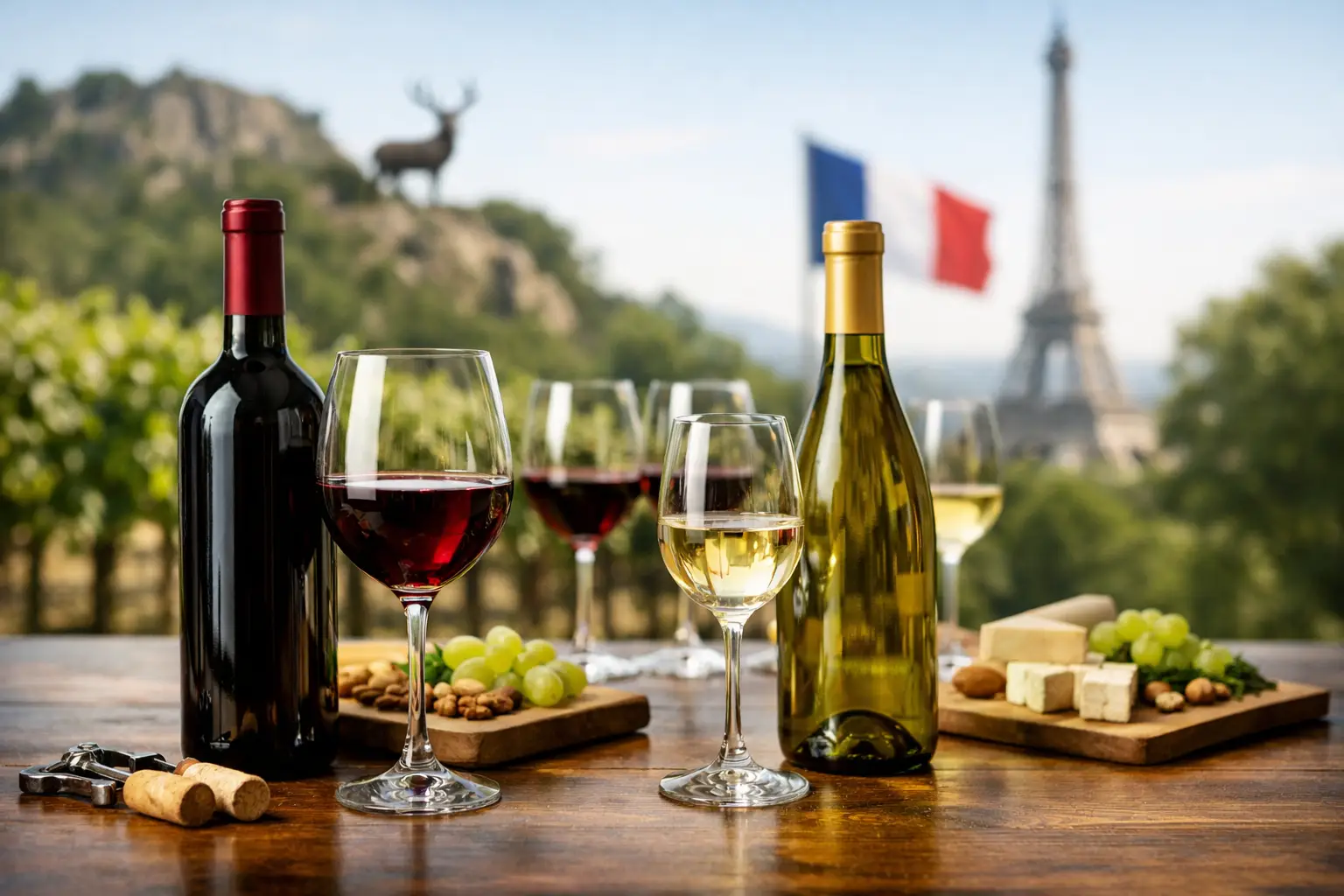
On October 11, 2026, Stag’s Leap Wine Cellars will offer more than a tasting. The Stagg’s Leap Wine Cellars October 11, 2026 tasting to commemorate Judgment of Paris 1976 places guests in conversation with one of the pivotal chapters in American cultural history: the afternoon when California wine stepped onto the world stage and refused to leave.
The occasion matters because the Judgment of Paris was never simply a surprise result in a blind tasting. It was a collision of old assumptions and new ambition. It revealed what happened when immigrant knowledge, scientific rigor, patient farming, and California confidence met in the same glass. For Napa Valley, it became a defining scene. For wine drinkers, it remains an invitation to look beyond the label and ask who made a place possible.
The Moment That Changed California Wine
On May 24, 1976, British wine merchant Steven Spurrier convened a blind tasting in Paris for the American bicentennial. French judges assessed California Cabernet Sauvignon against leading Bordeaux and California Chardonnay against white Burgundy. The outcome traveled far beyond the room: a 1973 Stag’s Leap Wine Cellars S.L.V. Cabernet Sauvignon, made by founder Warren Winiarski, ranked first among the reds. Chateau Montelena’s 1973 Chardonnay took first among the whites.
The results were initially treated as an anomaly by some critics. Yet the tasting ultimately became a reckoning. California had demonstrated that it could produce wines of structure, longevity, and distinction on terms that the most established European palates could recognize.
That statement deserves care. The Judgment of Paris did not create great California wine overnight, nor did it diminish the achievement of France. It gave international visibility to work already underway in vineyards, cellars, and laboratories throughout the state. The real story is larger than a single scorecard: a community of determined people had spent decades building the conditions for that afternoon to occur.
Why Stag’s Leap Wine Cellars Carries the Story
Winiarski’s winning S.L.V. Cabernet came from the Stags Leap District, a Napa Valley landscape of volcanic soils, warm days, and cooling influences that can bring tension and perfume to Cabernet Sauvignon. He recognized extraordinary potential in the vineyard and pursued a style that joined California ripeness with restraint, structure, and age-worthiness.
That balance is part of the wine’s enduring significance. The 1973 S.L.V. was not celebrated merely because it was bold or because it startled a French panel. It suggested that Napa Valley Cabernet could be articulate: powerful without becoming crude, generous without losing shape, and capable of speaking clearly of its origin.
A commemorative tasting at Stag’s Leap Wine Cellars is therefore most meaningful when understood as an encounter with a continuing discipline. Vintage variation, vineyard decisions, barrel programs, bottle age, and changing tastes all shape what guests experience. A historic result cannot be reproduced on command. It can, however, be examined through the wines and through the decisions that gave them their identity.
A Legacy Built by Many Hands
The Judgment of Paris is often told as a dramatic upset, and drama is certainly there. But the deeper history includes growers who took risks, founders who invested before the world was watching, and winemakers who treated California fruit with serious technical and aesthetic intent.
Among the giants whose influence helped form modern Napa was Andre Tchelistcheff, the Russian-born enologist often called the father of modern California winemaking. Miraculously rescued from the upheavals of twentieth-century Europe, he arrived in California with scientific training, exacting standards, and an instinct for mentorship. At Beaulieu Vineyard and across the valley, Tchelistcheff elevated conversations about viticulture, fermentation, sanitation, aging, and the patient pursuit of quality.
He was not the winemaker of the 1973 Stag’s Leap Wine Cellars Cabernet, and historical precision matters. Yet his influence belonged to the wider Napa culture that made such wines possible. Tchelistcheff helped establish a professional vocabulary and a standard of aspiration. The next generation did not merely inherit techniques. They inherited permission to think of California wine as a serious global art.
What a 2026 Judgment of Paris Commemoration Can Reveal
Fifty years after the Paris tasting, the most compelling question is not whether Napa has “won.” That question was answered long ago. The richer question is how a regional breakthrough becomes a living legacy rather than a museum piece.
A thoughtful tasting can make that legacy tangible. It can show how Cabernet evolves from vivid fruit and firm tannin toward cedar, tobacco, earth, and savory detail. It can illuminate the difference between a wine designed for immediate pleasure and one built to gather complexity over decades. It can also remind guests that a bottle is a record of weather, farming, human judgment, and time.
For collectors, that perspective can sharpen the meaning of provenance and cellaring. A famous name alone is not a guarantee of a transcendent bottle. Storage history, fill level, closure condition, vintage character, and service all matter. The great pleasure of mature wine is inseparable from its uncertainty. Every opened bottle is both an object of knowledge and a small act of faith.
For Napa visitors and hospitality professionals, the occasion offers another lesson. The valley’s prestige did not emerge from luxury branding alone. It was earned through craft, collaboration, and the courage to make wines for a future audience. That distinction matters at a time when wine tourism can sometimes favor spectacle over substance. The best experiences return guests to the land, the cellar, and the human beings whose standards made the reputation possible.
The Story Beyond the Tasting Room
The Judgment of Paris has endured because it contains the architecture of a great American story. It is about outsiders entering a closed world. It is about the long work behind an apparent overnight success. It is about immigrants and mentors, farmers and entrepreneurs, science and instinct. It is also about the productive tension between honoring tradition and refusing to be limited by it.
That is why the event continues to inspire historians, filmmakers, writers, and wine lovers. A blind tasting in Paris became cinematic because it compressed years of risk into one room and made the result impossible to ignore. But the emotional weight lies in what came before and what followed: the lives committed to vineyards, the reputations placed on the line, and the younger vintners who saw that a new future could be built in California.
For an audience drawn to heritage, the October 11 commemoration is an opportunity to resist the flattening effect of anniversary culture. The value is not in repeating a famous date or treating a landmark bottle as a trophy. It is in recovering the human scale of achievement. Warren Winiarski’s vision, the character of S.L.V., Steven Spurrier’s gamble, the judges’ unguarded verdict, and the generation of mentors represented by Andre Tchelistcheff all belong to the same larger arc.
A great tasting ends when the glasses are cleared. A great wine story stays with us because it changes how we see the next bottle, the next vineyard, and the next person willing to begin before the world believes. That is the lasting charge of the Judgment of Paris: preserve the past carefully, then use it to make the future more daring.

