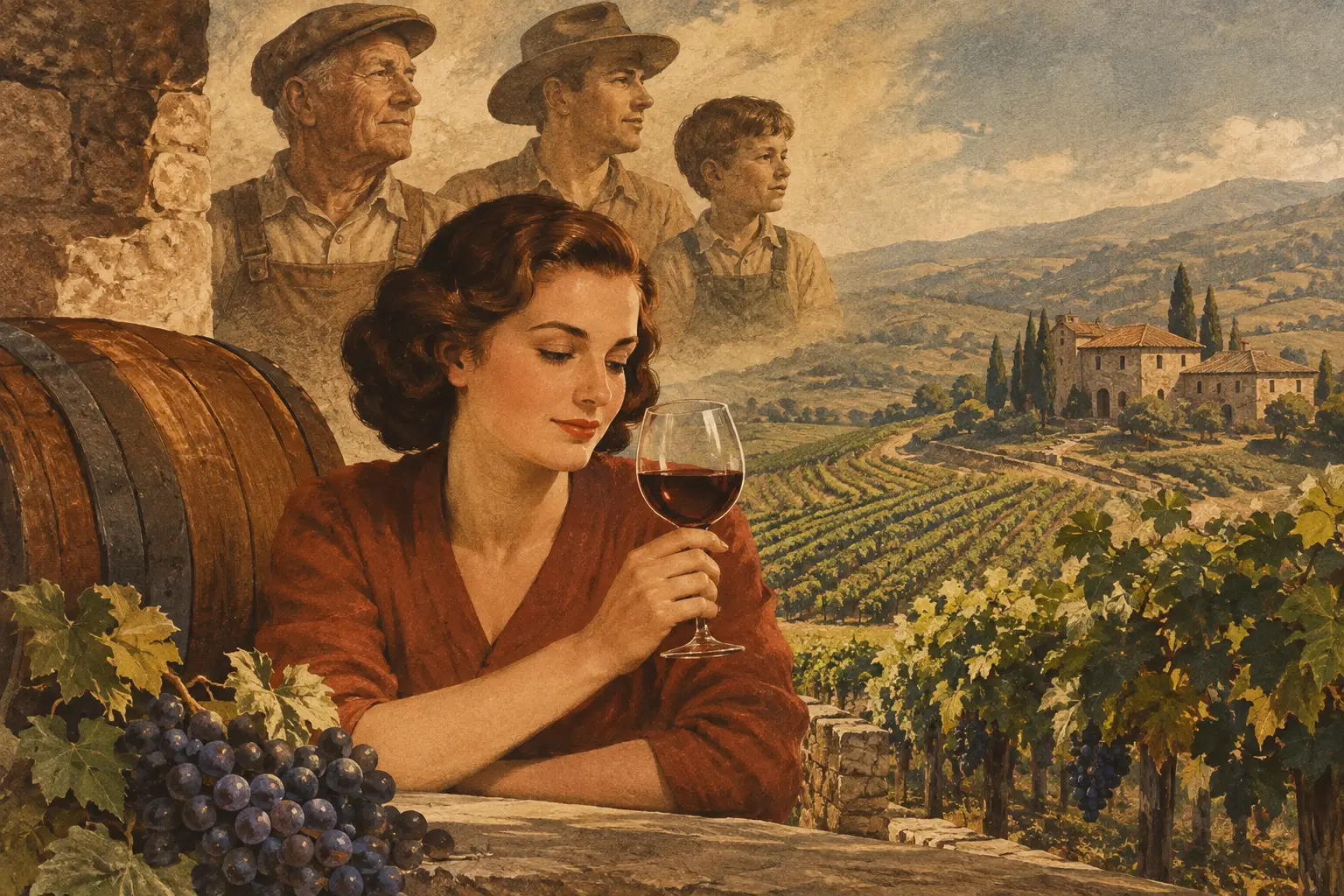
A cellar can hold far more than bottles. It can hold the letters of a founder, the weathered notebooks of a winemaker, a photograph from the first harvest, and the hard-won memory of a family that gambled on an unproven hillside. Winery brand heritage storytelling gives those artifacts a living role. It turns provenance from a line on a label into a human drama that guests can feel, remember, and carry forward.
For celebrated regions such as Napa Valley, this is not ornamental marketing. The story behind a wine often explains why the wine matters. It reveals the immigrant courage, scientific rigor, agricultural risk, and personal conviction that helped transform California from a promising frontier into one of the world’s defining wine cultures.
Heritage Is More Than a Founding Date
Many wineries possess history. Fewer have identified the narrative within it. A founding year, an old stone building, and a multigenerational family tree are meaningful details, but details alone do not make a story. Heritage becomes compelling when it contains stakes: a difficult choice, a setback, a breakthrough, or a person whose vision changed what others believed was possible.
The strongest winery stories do not begin with the question, “What makes us old?” They begin with, “What did someone have to overcome for this place to exist?” That distinction matters. Age can establish credibility, but conflict and character create emotional connection.
Consider the forces that shaped modern California wine: Prohibition, war, migration, economic uncertainty, changing consumer tastes, and the long campaign for international respect. A winery that can locate its own history within those larger currents offers visitors more than an estate tour. It offers a place in the American story.
Why Winery Brand Heritage Storytelling Builds Value
Wine is unusually suited to historical narrative because it is already an expression of time. A vintage marks a particular season. A vineyard reflects decisions made decades earlier. A bottle opened at a table can connect the people present with a moment preserved from the past.
Heritage storytelling extends that sense of time beyond the glass. It gives collectors a deeper reason to preserve a bottle, hospitality teams a richer language for welcoming guests, and consumers an answer to the question that matters beneath every purchase: why this wine, from this place, made by these people?
This does not mean every brand must present itself as a century-old estate. A young winery may have a powerful heritage narrative rooted in a founder’s earlier life, a community’s agricultural history, the restoration of an overlooked vineyard, or a singular mentor who shaped its philosophy. Heritage is not a claim to antiquity. It is an honest account of inheritance, purpose, and continuity.
When treated with care, that account can also travel. A label has limited space. A well-built story can become a tasting-room experience, a book, a short film, a museum collaboration, a collector event, or a documentary project. The core narrative remains recognizable while each format reveals a different dimension of the legacy.
Begin With the People Who Carried the Work Forward
Great wine history is rarely a solo performance. Founders matter, but so do vineyard workers, cellar masters, family members, mentors, growers, educators, and critics who recognized excellence before the wider world caught up. The challenge is to avoid turning history into a crowded timeline.
Choose the figures whose decisions altered the winery’s course. Give them specificity. What did they see that others missed? What were they willing to risk? What did they protect when circumstances made retreat easier?
Andre Tchelistcheff’s career offers a defining example of this kind of legacy. Miraculously rescued from upheaval in Russia, he brought scientific training, relentless standards, and a larger vision to California wine. His work at Beaulieu Vineyard and his mentorship across Napa helped reinvent American winemaking. The significance lies not simply in a list of technical achievements, but in the dramatic arc of a man whose survival, discipline, and generosity changed an entire region.
For a winery, the lesson is clear: facts establish authority, while character gives facts their force. A soil study becomes more meaningful when connected to the person who insisted that a neglected parcel could produce greatness. A cellar innovation gains weight when audiences understand the resistance it faced.
Let archives do real work
Archives should not be treated as decoration. A handwritten harvest note, a newspaper clipping, a vineyard map, or a recording of an elder’s voice can supply the evidence and texture that generic brand language cannot.
Preservation requires discipline. Record oral histories before memory fades. Identify photographs before the people in them are forgotten. Digitize fragile documents, but retain the context around them: who created the item, when, why, and what it reveals. The most valuable archive is not necessarily the largest one. It is the one whose materials can be understood and trusted.
Build a Narrative, Not a Museum Placard
A winery’s history should have movement. One useful structure begins with the world before the change, introduces the pressure or obstacle, follows the decisive action, and shows the lasting consequence. This is the architecture of history when it becomes cinematic without sacrificing truth.
A founder may arrive in a valley dismissed by outsiders. A family may endure a devastating frost or financial collapse. A winemaker may challenge prevailing methods and face skepticism. The resolution need not be triumphant in every respect. In fact, stories gain credibility when they acknowledge loss, disagreement, and unfinished work.
There is a trade-off here. Simplifying a complicated past can make a message easier to repeat, but it can also flatten the people involved and invite skepticism from knowledgeable audiences. The better approach is selective depth. Tell one central story clearly, then create room for guests and readers to encounter its complexities over time.
That is especially important when a winery’s history intersects with immigration, land use, labor, or cultural change. These subjects deserve accuracy and respect, not a polished myth. A brand earns lasting trust when it is willing to be proud without becoming self-congratulatory.
Make the Story Tangible at Every Encounter
Heritage must be encountered, not merely declared. In a tasting room, this may mean placing a historic image beside the wine it helped make possible, training hosts to tell a short, precise story, or designing a flight around pivotal vintages and turning points.
For collectors, the story may live in a library release that explains the vineyard decision behind a rare bottling. For digital audiences, it may take the form of narrated archival footage, a short interview with a veteran grower, or a scene-driven account of a defining harvest. For institutions and entertainment partners, a rigorously researched story can support exhibitions, publishing, documentary development, and scripted projects.
The medium should follow the material. Not every anecdote requires a film, and not every historic figure needs a sweeping biography. Yet some stories possess a scale that asks for more than a brochure. Maestro Productions’ Wine Elf project recognizes this possibility in Tchelistcheff’s life: wine history can carry the emotional scope of prestige historical drama because the people who shaped it lived through consequential times.
Protect Credibility as Carefully as the Cellar
Heritage storytelling can fail when it becomes costume. A sepia-toned image and a few references to tradition will not persuade a serious wine audience if the underlying account is vague or overstated.
Use primary sources where possible. Verify dates and claims. Distinguish between family lore and documented history, without dismissing either. If a story has been repeated for generations but cannot be confirmed, present it as a cherished recollection rather than established fact. That small act of honesty strengthens the entire narrative.
It also helps to recognize whose voices have been missing. The history of a winery may include people whose labor, knowledge, or sacrifice was essential but insufficiently credited. Bringing those perspectives forward is not a departure from heritage. It is often the work of preserving it fully.
A Legacy Worth Passing On
The finest winery stories do not use the past as a backdrop for a sales pitch. They make the past present. They allow a guest standing among the vines to understand that beauty was built through choices, expertise, and perseverance.
That understanding changes the experience of a bottle. It invites reverence without demanding it, and it gives the next generation something more enduring than a brand claim: a truthful story of people who made a place matter. Preserve those stories while their voices, documents, and landscapes remain within reach. The future of a winery may depend on the care it gives its past.

