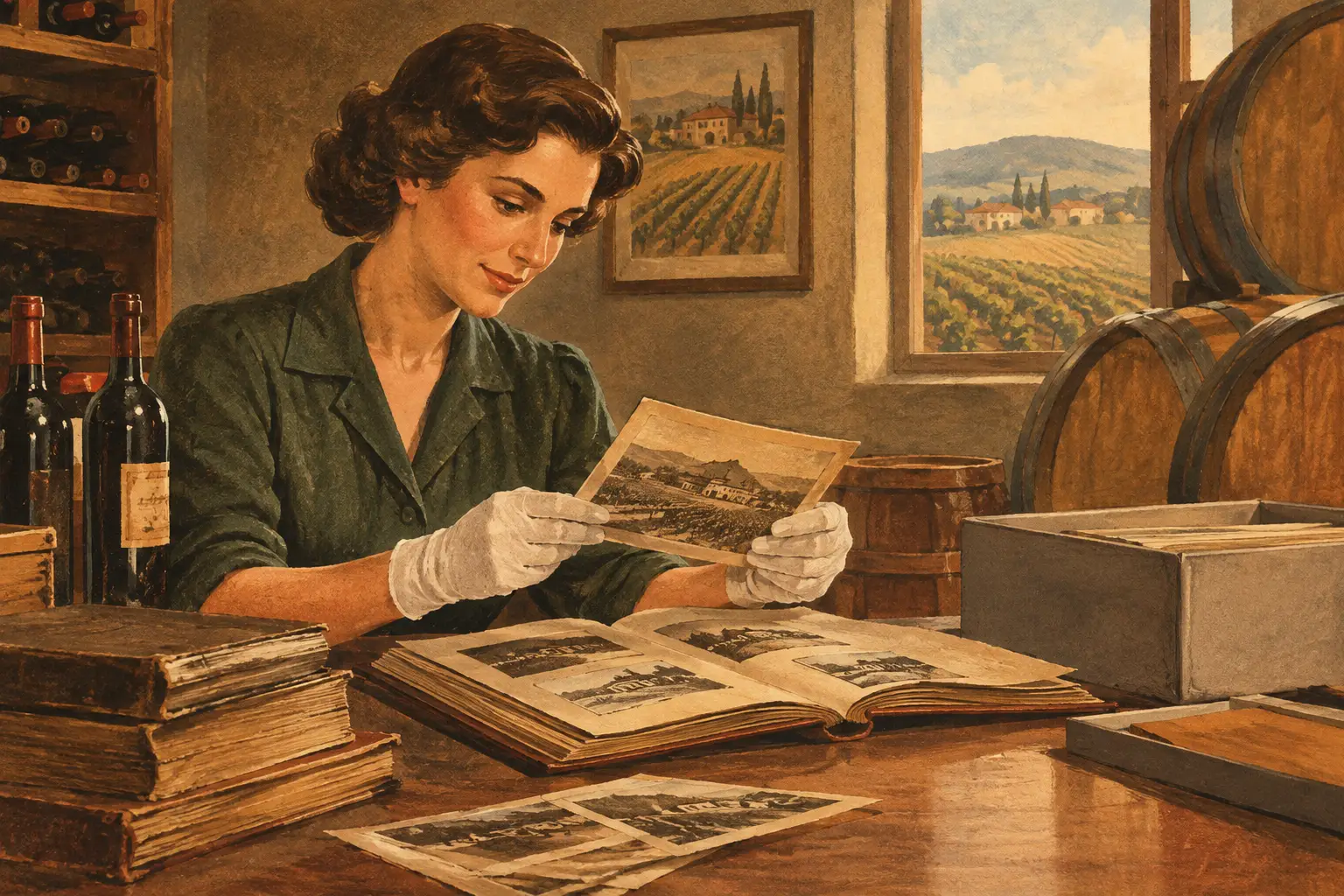
A winery archive can fit inside a cedar chest, a cellar cage, a retired winemaker’s filing cabinet, or a folder on a forgotten office computer. Within it may rest the first harvest notes, photographs of a founder standing in an unfinished vineyard, correspondence with growers, early labels, and bottles that witnessed a region’s ascent. Learning how to preserve winery archives is therefore not a matter of tidiness. It is an act of cultural stewardship.
For American wine, the stakes are unusually high. Napa Valley’s rise was neither inevitable nor anonymous. It was shaped by immigrants, scientists, farmers, entrepreneurs, cellar workers, and visionaries who took risks before the world was watching. If the evidence of their work disappears, the history of modern winemaking becomes thinner, flatter, and easier to misremember.
How to Preserve Winery Archives With Purpose
The first task is to define what the archive is meant to protect. A winery’s history is not limited to its most marketable milestones. It includes the long, sometimes difficult road to those moments: failed vintages, replanting decisions, handwritten formulas, family disputes, grower relationships, and the mentorship that passed knowledge from one generation to another.
Begin with a clear archival mission. It may be as direct as preserving the founder’s legacy, documenting a multigenerational family business, or recording the evolution of a vineyard before ownership changes hands. That purpose will guide difficult choices later, especially when space, time, and budget are limited.
An archive should also have a designated steward. At a small winery, this may be an owner, family member, tasting-room leader, or trusted consultant. At a larger estate, it may belong with a communications director, historian, librarian, or collections manager. What matters is continuity. Materials without an identified caretaker tend to become vulnerable during staff transitions, renovations, mergers, and estate settlements.
Start With an Inventory, Not a Cleanout
The temptation is to sort quickly: keep the attractive photographs, frame a few old labels, discard the rest. That approach can erase the very context that makes an archive meaningful. A weathered envelope may identify the people in a photograph. A stack of invoices may reveal when a vineyard was planted. A marked-up production log may show the moment a winemaker changed the course of a wine.
Create a simple inventory before moving or discarding anything. Record what each item is, its date or approximate date, who created it, where it came from, and its physical condition. Group materials by broad categories such as correspondence, vineyard records, winemaking notes, photographs, marketing materials, press clippings, audiovisual recordings, and bottles or packaging.
Original order matters. If a winemaker kept harvest reports, lab analyses, and handwritten observations together, that relationship tells a story. Photograph shelves, boxes, and desk drawers before reorganizing them. Preserve labels, folder names, and notes attached to materials, even when they appear informal. They can later provide essential clues about chronology and authorship.
Do not assume that digital files are automatically safe. Early winery websites, email archives, digital photography, video footage, and design files can become unreadable as software and storage devices change. A hard drive in a drawer is not preservation. It is an unanswered question.
Protect the Physical Record From Quiet Damage
Most archival losses do not arrive as dramatic disasters. They come through heat, sunlight, moisture, insects, dust, adhesive tape, and well-intended handling. Wine country presents particular challenges: warm summers, wildfire smoke, cellar humidity, and buildings designed for hospitality rather than long-term storage.
Choose a clean, stable interior space away from windows, water pipes, exterior walls, food storage, and active cellar operations. Avoid attics, garages, barns, and basements prone to flooding. Stability is more valuable than perfection. Rapid swings in temperature and humidity can cause paper to warp, photographs to stick, labels to fade, and magnetic or digital media to degrade.
Use archival-quality folders and boxes when possible. Store papers flat or upright with support, rather than packed tightly into overfilled cartons. Remove rubber bands, rusty paper clips, and acidic newspaper clippings when they threaten nearby material. Never use tape, lamination, or household glue to repair historic documents. A conservator can advise on fragile objects, mold, water damage, and valuable photographic collections.
Bottles deserve their own preservation plan. A library of historic vintages can be both a physical collection and a record of a winery’s evolving style. Keep a bottle inventory with producer, vineyard, vintage, format, provenance, storage history, and any notes about label condition or cork integrity. Store bottles under appropriate cellar conditions, but do not treat them only as future tasting inventory. A bottle from a formative vintage may be an artifact of greater historical value unopened than consumed.
Preserve the Voices Behind the Paper
Records establish facts. Oral histories restore breath, texture, and human consequence.
Interview founders, retired winemakers, vineyard managers, cellar hands, longtime growers, hospitality leaders, and members of the surrounding community. Ask them to identify people in photographs, explain local customs, describe pivotal harvests, and recall decisions that never appeared in a press release. The strongest questions are often specific: Who made the call to harvest? What did the vineyard look like before replanting? Which mentor changed your work? What did the winery fear losing at that moment?
Record interviews in a quiet setting, with consent and a clear understanding of how the material may be used. Create a transcript, identify speakers and dates, and store the original recording in more than one secure location. Oral history is not a substitute for documentation. Memory can be imperfect, and that imperfection is part of the record. When paired with letters, photographs, and production notes, it reveals the emotional truth behind the facts.
This is especially vital for the generation that built postwar California wine. Figures such as André Tchelistcheff did more than refine technique. They trained successors, set standards, and helped a young industry recognize its own possibilities. The people who worked beside such leaders carry details no ledger can preserve.
Build a Digital Archive That Can Survive Change
Digitization expands access, but scanning alone does not create a usable archive. Each file needs a name, a date, a description, and a relationship to the physical original. Without that information, a collection of thousands of image files becomes another form of obscurity.
Use consistent file names that include a date, subject, and sequence number. For example, a harvest photograph might be identified by year, vineyard, subject, and image number. Keep a spreadsheet or collection-management system that records where the original item is stored, who holds rights to it, and any restrictions on publication.
For photographs and documents, capture a high-resolution preservation file and create smaller copies for routine sharing. Keep at least three copies of the digital archive, stored in two different types of media, with one copy in a separate geographic location or secure cloud environment. Review files periodically. Storage technology changes, and preservation requires migration, not abandonment.
Rights require equal attention. A winery may possess a photograph without owning permission to publish it. Clarify copyright, usage permissions, privacy concerns, and donor agreements while the people involved are still reachable. This protects the archive and makes future books, exhibitions, documentaries, and educational projects far easier to develop responsibly.
Make the Archive Part of Winery Life
A preserved archive should not be sealed away from the people it was created to serve. Selected materials can enrich staff education, collector events, anniversary programs, visitor experiences, publications, and collaborations with museums or cultural institutions. The goal is not to turn every historic item into marketing. It is to let the record deepen the public understanding of the place.
Access must be thoughtful. Separate materials suitable for public display from confidential personnel records, financial documents, private family correspondence, and sensitive legal files. A simple access policy prevents confusion and protects trust. For especially significant collections, a partnership with a library, university, museum, or professional archivist may offer expertise and long-term security that an individual winery cannot provide alone.
The trade-off is real. Institutional partnerships can require time, formal agreements, and some surrender of direct control. Yet they may also ensure that a winery’s legacy survives beyond a single ownership group or economic cycle. The right answer depends on the collection’s scale, condition, significance, and the family or company’s hopes for the future.
A winery archive is a living inheritance. Preserve the harvest ledger. Save the contact sheet. Record the old cellar story before its last witness is gone. Years from now, someone may open a box, hear a voice, study a bottle, and understand that American wine was built not only in vineyards and cellars, but in the memories brave enough to be kept.

