A bottle of great wine can carry a century inside it: the soil, the weather, the discipline of the cellar, and the force of personality behind a decisive vintage. Historical biography documentary development begins with the same recognition. A consequential life is never merely a chronology of dates. It is a living record of the events, institutions, risks, and acts of imagination that changed what came after.
For American wine, few lives offer a more cinematic record than that of Andre Tchelistcheff. Born in Russia, shaped by revolution and displacement, scientifically trained in France, and later welcomed into Napa Valley, he helped reinvent American winemaking. His story belongs not only to the vineyard but also to the larger American tradition of immigrant achievement, reinvention, mentorship, and cultural transformation.
Why a Historical Life Needs More Than a Timeline
A historical documentary succeeds when the audience feels the pressure of the moment. The subject must want something that circumstances make difficult or dangerous to attain. That tension may arise from war, exile, prejudice, financial hardship, a scientific problem, or a regional industry still searching for its identity.
This is why biography is such fertile ground for premium documentary and scripted work. It provides an audience with a human anchor while opening onto a much wider canvas. The best films do not simply tell viewers that a figure mattered. They show the uncertainty before the breakthrough, the people who resisted change, and the craft required to make an idea endure.
In the story of Tchelistcheff, Napa Valley is not a backdrop. It is a character in its own right: promising but unproven, agricultural yet ambitious, capable of producing wines that could command the world’s attention. His arrival at Beaulieu Vineyard in 1938 placed a rigorous European education inside a young American industry. The result was a new standard of care in the vineyard and cellar, expressed through technical precision, patience, and an uncompromising belief in quality.
A documentary development process must locate this essential dramatic question early: what changed because this person entered the story? For a winemaking pioneer, the answer extends beyond individual bottles. It includes professional methods, influential protégés, a region’s confidence, and the eventual emergence of California wine on the global stage.
Historical Biography Documentary Development Begins With Evidence
Cinematic feeling without evidence becomes legend. Evidence without feeling becomes a lecture. The work is to hold both together.
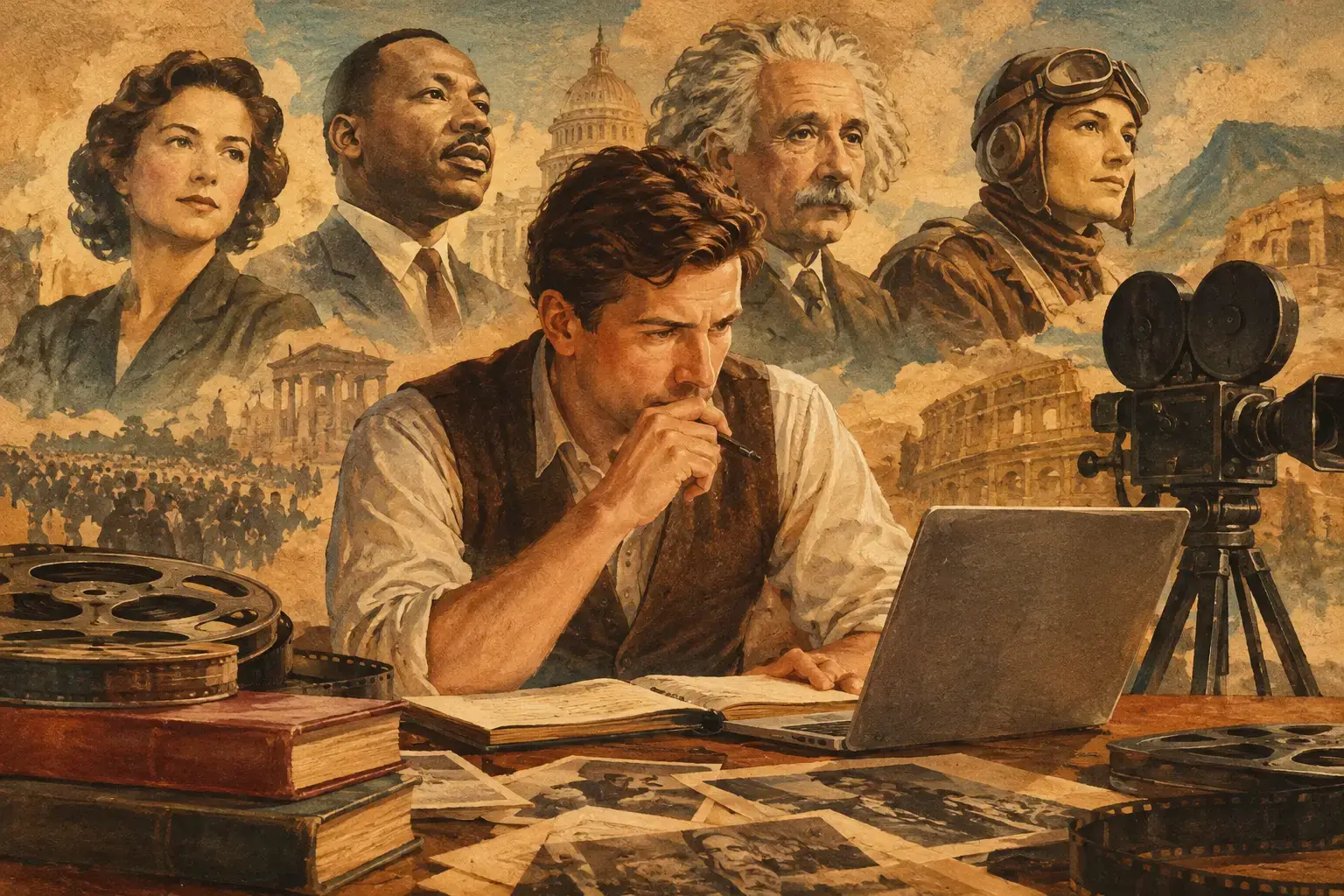
The foundation is archival research: letters, photographs, recorded interviews, trade publications, scientific papers, family records, winery materials, newspapers, vintage notes, and institutional collections. Each source has a different purpose. A letter may reveal private doubt. A technical document can establish expertise. A photograph can return a vanished room, vineyard, or face to the screen. Oral history may preserve the voice of someone who witnessed a defining decision.
Research also protects the story from the easy simplifications that can flatten a master into a monument. Reverence should not mean avoiding complexity. A gifted figure may be demanding, private, restless, or misunderstood. The tensions in a life often make the legacy more credible, not less. Viewers do not need perfection. They need to understand the cost of excellence.
For wine history, the evidentiary standard matters especially because the public memory of a region often condenses decades of labor into a few famous names and moments. The Judgment of Paris, for example, became an international symbol of California’s arrival. Yet that dramatic event rests on an earlier foundation of growers, vintners, scientists, and mentors who spent years proving that American wines could aspire to greatness. A strong documentary recognizes both the celebrated turning point and the long, disciplined work that made it possible.
The archive must serve the scene
Development is not an exercise in collecting every available fact. It is the art of selecting material that can create scenes. A research file becomes cinematic when it helps answer practical questions: Where was the subject standing? Who was in the room? What was at stake? What could be lost? What did a particular gesture or decision set in motion?
Sometimes a single detail can carry more emotional weight than a page of exposition. The laboratory discipline behind a fermentation decision, the hands of an aging vintner, the sound of a cellar door, or a survivor recalling a departure from home can make history immediate. These details invite audiences to encounter the past as lived experience rather than distant information.
Building a Screen Story Around Transformation
The most durable biography documentaries are built around transformation, not admiration. A subject can be famous and still make a static film if nothing changes. Conversely, an overlooked figure can command attention if the story traces a genuine passage from one state of life to another.
For immigrant pioneers, that transformation may begin with survival. Tchelistcheff’s path from revolutionary Russia to France and then California contains the architecture of a sweeping historical narrative: upheaval, rescue, education, arrival, and influence. Yet the story becomes more than an immigrant success account when it examines what he carried with him. His training, discipline, palate, and standards became part of Napa Valley’s cultural inheritance.
That inheritance offers multiple points of entry for a documentary audience. Wine enthusiasts can see how modern California winemaking developed. Visitors to Napa Valley can understand why particular wineries and vineyards hold such meaning. Cultural audiences can encounter a twentieth-century story of displacement and achievement. Industry professionals can reflect on mentorship, reputation, and the transmission of craft across generations.
The strongest development work identifies these audience doors without diluting the central narrative. A film cannot be all things to all viewers. It needs a clear emotional spine. But a life of consequence can resonate across communities when its deeper themes are honestly rendered.
The Form Should Follow the Material
Not every historical biography belongs in the same format. Some lives demand a feature documentary, where a single emotional arc can build toward a resonant conclusion. Others need a limited documentary series, particularly when the story moves through several countries, decades, or interconnected figures. A scripted miniseries may be the right form when private conversations, political danger, and personal stakes need dramatic embodiment.
The choice depends on the available archive, the scale of the narrative, and the intended audience. If firsthand footage and testimony are abundant, documentary may offer extraordinary intimacy. If the record is rich in events but visually sparse, scripted scenes, carefully used narration, period design, and expert voices may better convey what happened. Often, the most compelling approach combines archival materials with cinematic photography of the places where a legacy remains visible.
For wine stories, visual restraint can be a strength. Vineyards at dawn, cellar work, old maps, weathered labels, family photographs, and the changing contours of a valley can establish atmosphere without turning history into advertising. The wine must remain connected to the people and decisions that gave it meaning. Otherwise, beautiful imagery risks becoming decoration.
From Research to an Enduring Cultural Property
A well-developed historical narrative can live beyond a single screen project. A book provides depth and permanence. Narrated promotional media introduces a subject’s voice and stakes to new audiences. Educational programs can bring the material into museums, libraries, wine institutions, and classrooms. A documentary can create renewed interest in a region, an archive, or a neglected historical figure.
This is not simply a commercial calculation, though responsible development should recognize partnerships, licensing, and distribution from the outset. It is a preservation strategy. When a story exists across formats, it has more opportunities to reach the people who can carry it forward: readers, collectors, students, travelers, filmmakers, and the families who safeguard local memory.
Maestro Productions approaches this work as an intellectual-property ecosystem rooted in historical integrity. The goal is not to reduce a life to content, but to give a consequential legacy the scale, care, and audience it deserves. A book, film, documentary concept, and institutional conversation can reinforce one another when they are all grounded in the same disciplined research.
The Responsibility of Telling a Legacy
Historical storytelling always involves choices. Whose testimony is centered? Which conflicts are acknowledged? How do living families, wineries, and communities see themselves in the record? Development should make room for expert scrutiny and for the humility to revise a narrative when new evidence appears.
That responsibility is especially meaningful in the wine world, where reputation is built slowly and heritage can be both personal and economic. A documentary may inspire visitors, collectors, or new attention for a winery, but its first obligation is to truthfully honor the people whose work shaped the region. The result should feel earned, not manufactured.
The most lasting historical biographies leave audiences with a sense that the past is still active around them. The next time a viewer walks through Napa Valley, opens a California Cabernet, or hears a winemaker speak of standards and mentorship, the landscape may look different. That is the enduring promise of a story well told: it gives the present a deeper memory and asks us to become worthy stewards of what remains.